Clinical Neuroscience & Computational Brain Imaging
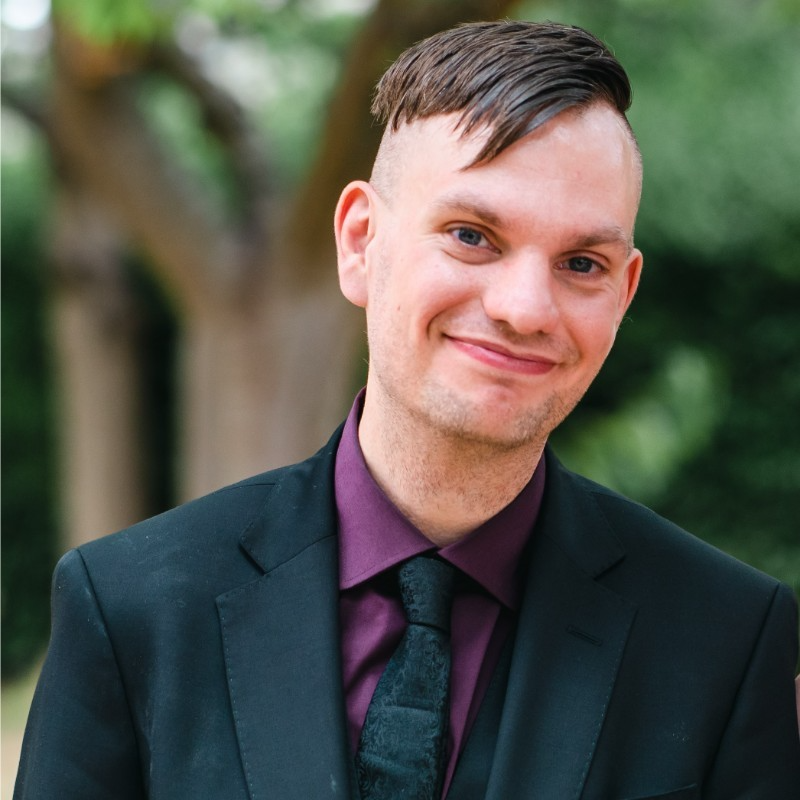
Dr. Daniel Halls
Medically trained doctor and Clinical Neuroscientist bridging clinical medicine, computational modelling, and high-resolution MRI to map the structural and functional architecture of the human brain.
Research
My work operates at the intersection of psychological medicine, computational neuroimaging, and behavioural data analysis. I am interested in moving beyond reductive models of mental health by using multimodal data and phenomenological experience to improve our understanding of mental health conditions. My work as a Research Fellow at the University of Nottingham is currently focused on focused ultrasound stimulation and diffusion MRI methods development.
I am the developer and maintainer of NFACT.
Previously, I completed my PhD in Psychological Medicine at King’s College London, investigating how socio-emotional processing, cognitive functions, and autistic traits relate to underlying neurobiology in eating disorders (specifically Anorexia Nervosa) through resting-state fMRI cyclic connectivity, diffusion MRI, and machine learning.
Imaging
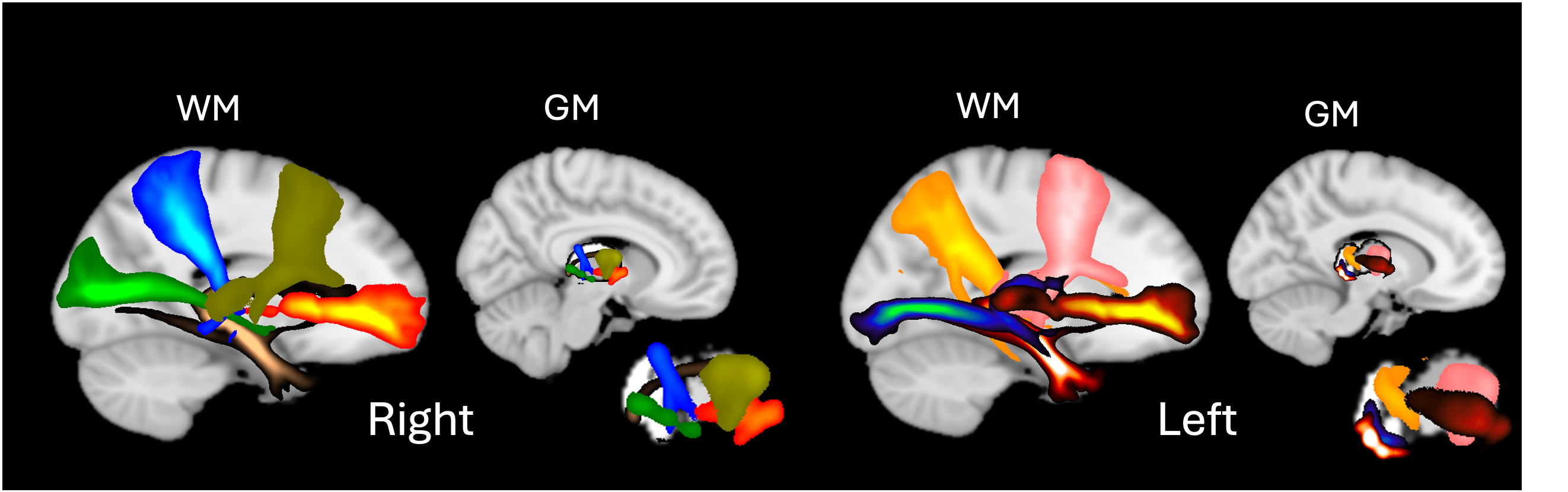
Thalamic Radiations
Subcortical white matter pathway mapping and signal decomposition in diffusion MRI to dissect thalamocortical connectivity using NFACT.
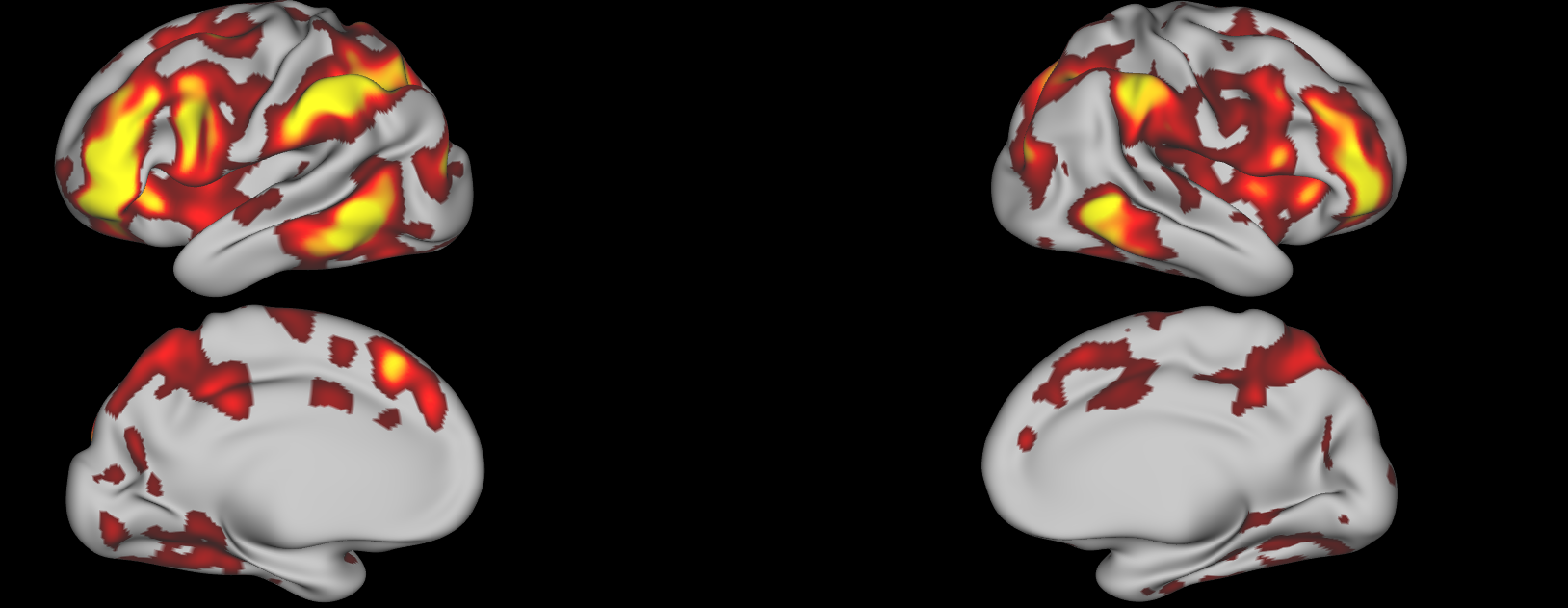
Resting-State fMRI
Macro-scale functional network analysis and rs-fMRI connectivity modelling.
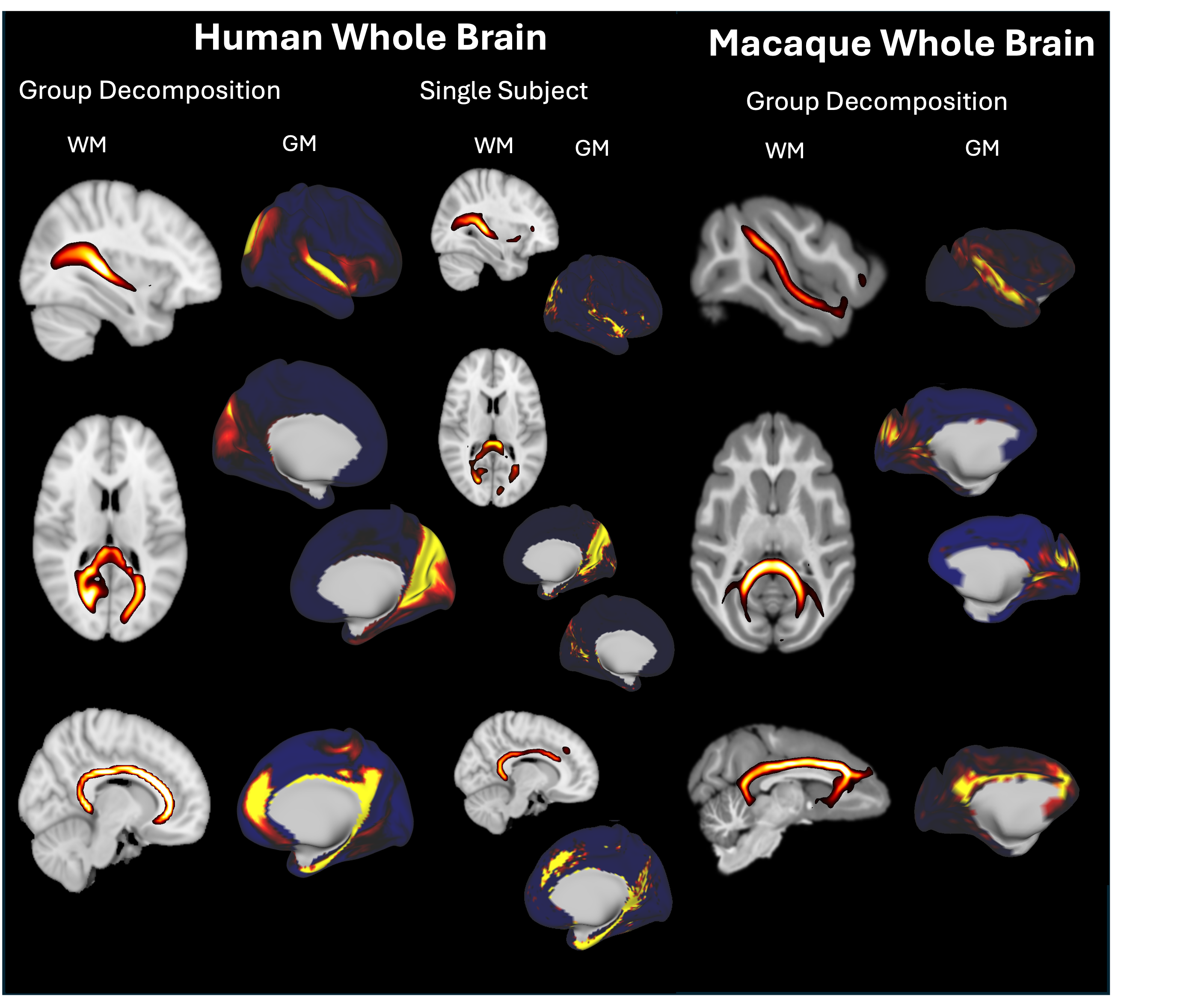
White Matter Tractography
Data-driven tractography of human brain pathways via NFACT.
Focus areas
Computational Psychiatry
Linking longitudinal biopsychosocial profiles, autistic traits, and socio-emotional task performance to neuroanatomical markers in clinical populations. Moving away from reductivist mental health models.
dMRI Signal Decomposition
Developing computational algorithms to decompose multi-shell diffusion tensor and spherical deconvolution signals into underlying tissue components.
Functional Connectomics
Constructing dynamic functional connectivity models to characterise functional brain states and network flexibility.
Machine Learning & Analytics
Applying Bayesian models, cluster analysis, and supervised machine learning pipelines to structural and functional neuroimaging repositories.
Methods
- Advanced data analytics in Python
- Pipeline development
- Task fMRI modelling
- rsfMRI connectomics
- FSL & SPM
- FreeSurfer
- Diffusion MRI
- Bayesian modelling
- Deep learning & machine learning
- Docker & HPC Slurm